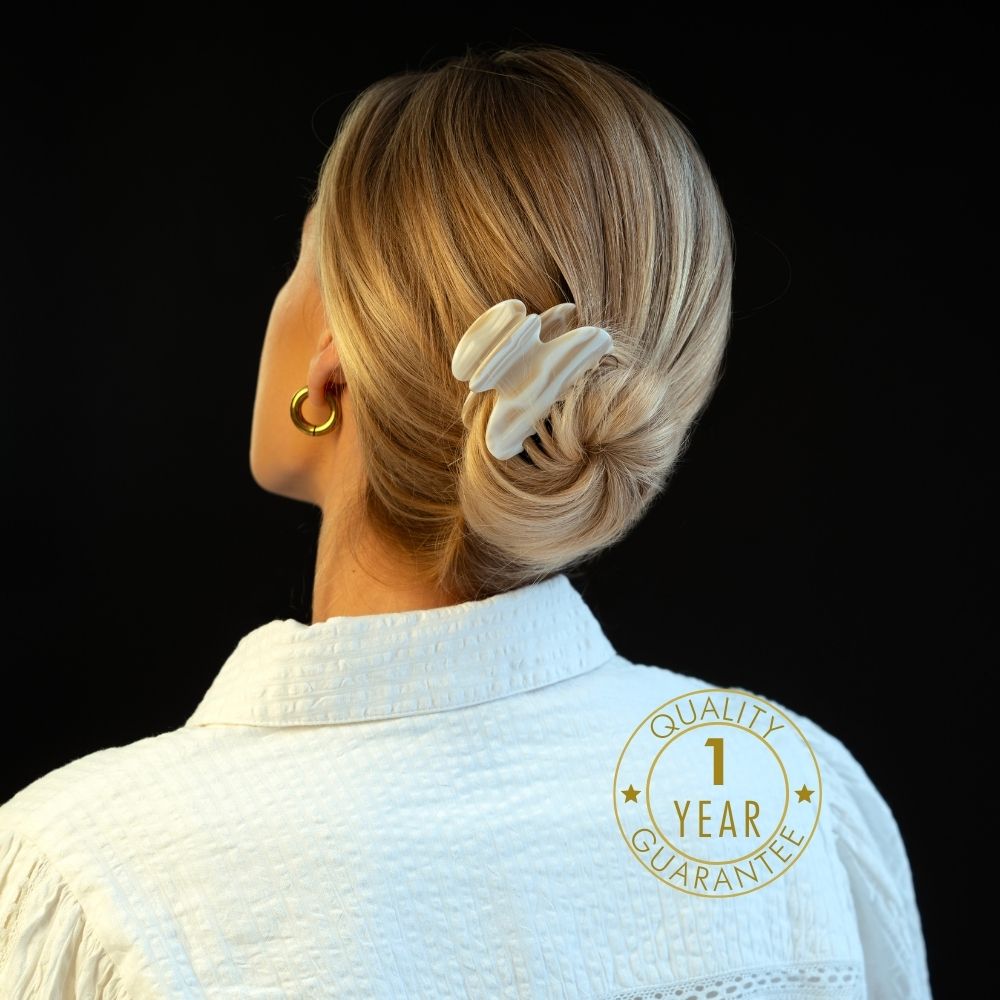
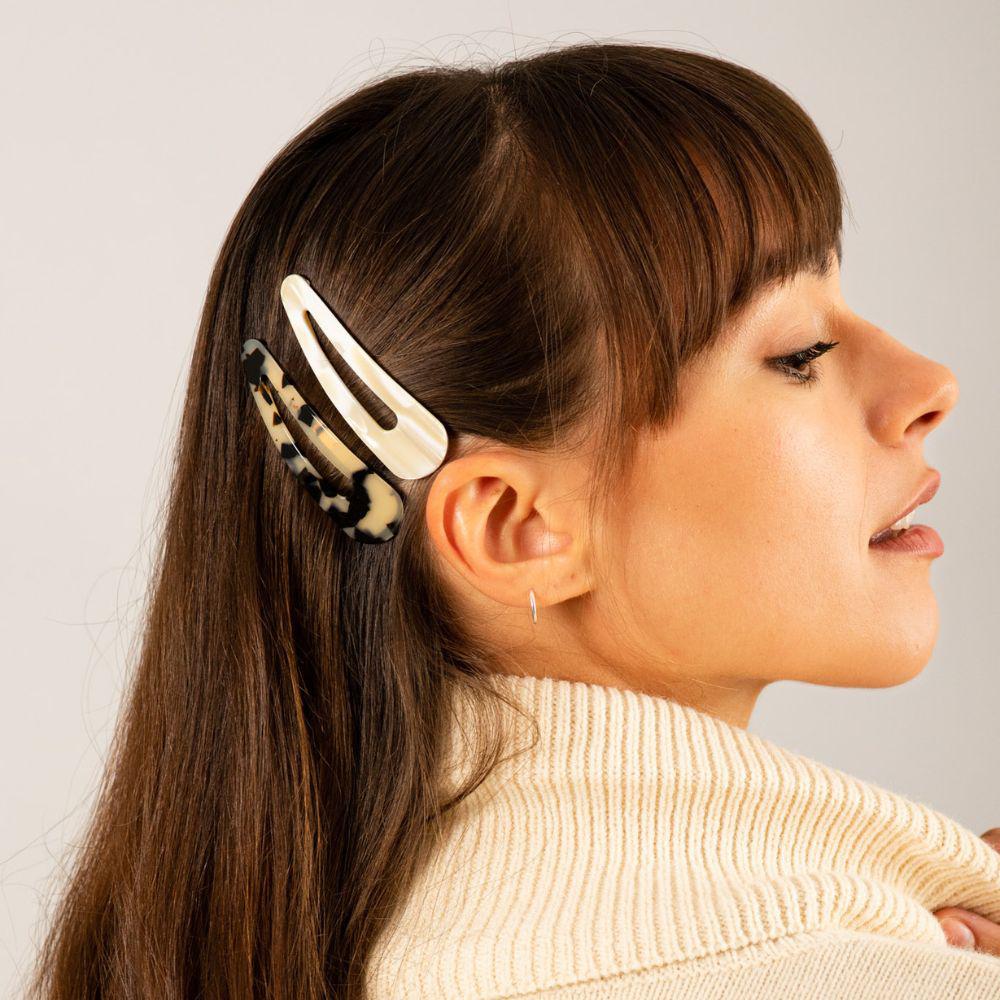




The short answer: no, not strictly. And we would rather tell you than let you find out.
Cellulose acetate, the material almost everything we sell is made from, is technically classed as a bioplastic. If plastic-free in the strictest sense is what you are looking for, we are not it, and we would rather you knew that before you ordered than after.
But it is almost certainly not the plastic you are trying to avoid, and the difference is worth a couple of minutes.
What is cellulose acetate actually made from?
Plant fibre. Wood pulp and cotton, treated so it can be formed into sheets. Not crude oil.
That is the fundamental split. A supermarket hair clip starts life as petroleum. Ours starts as a tree and a cotton plant.
How is it different from the plastic in a cheap hair clip?
Where it comes from. Plant cellulose rather than fossil oil.
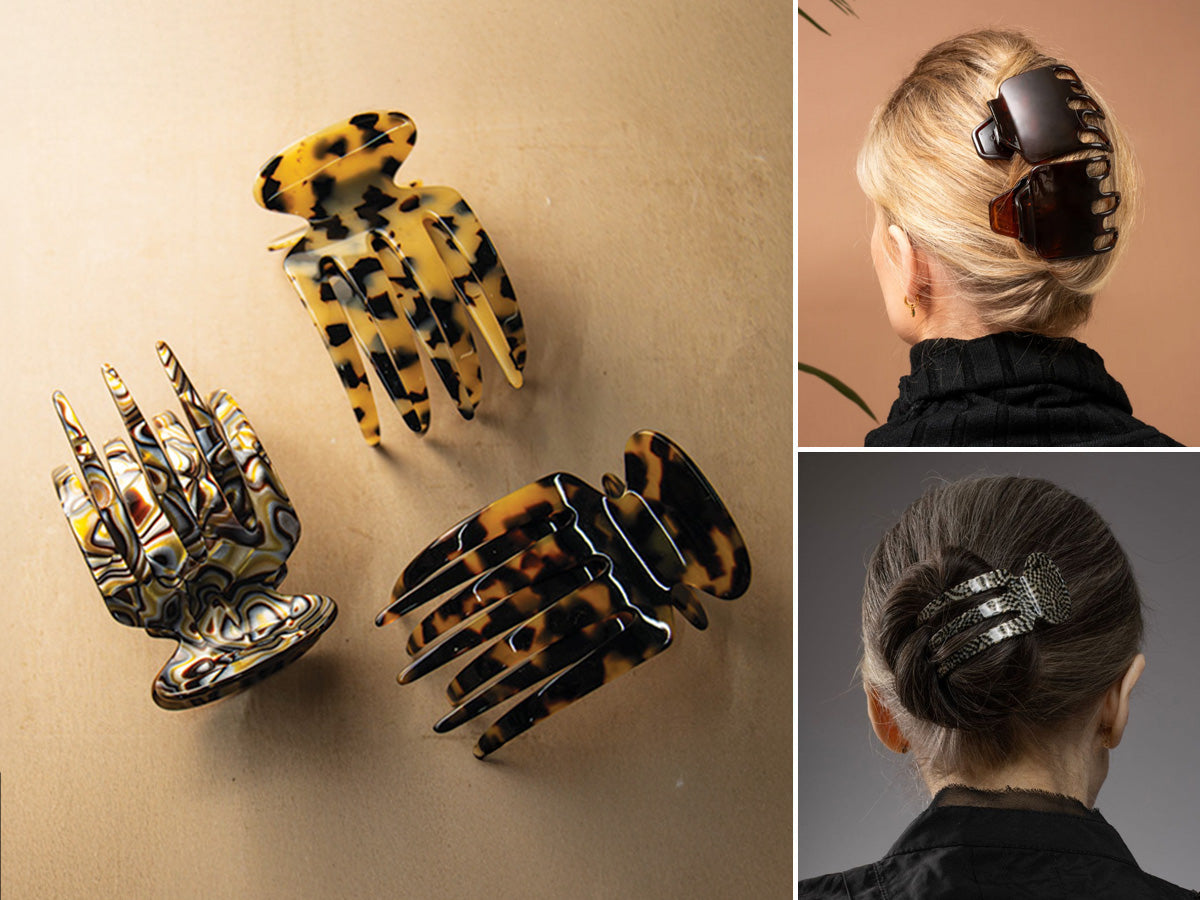
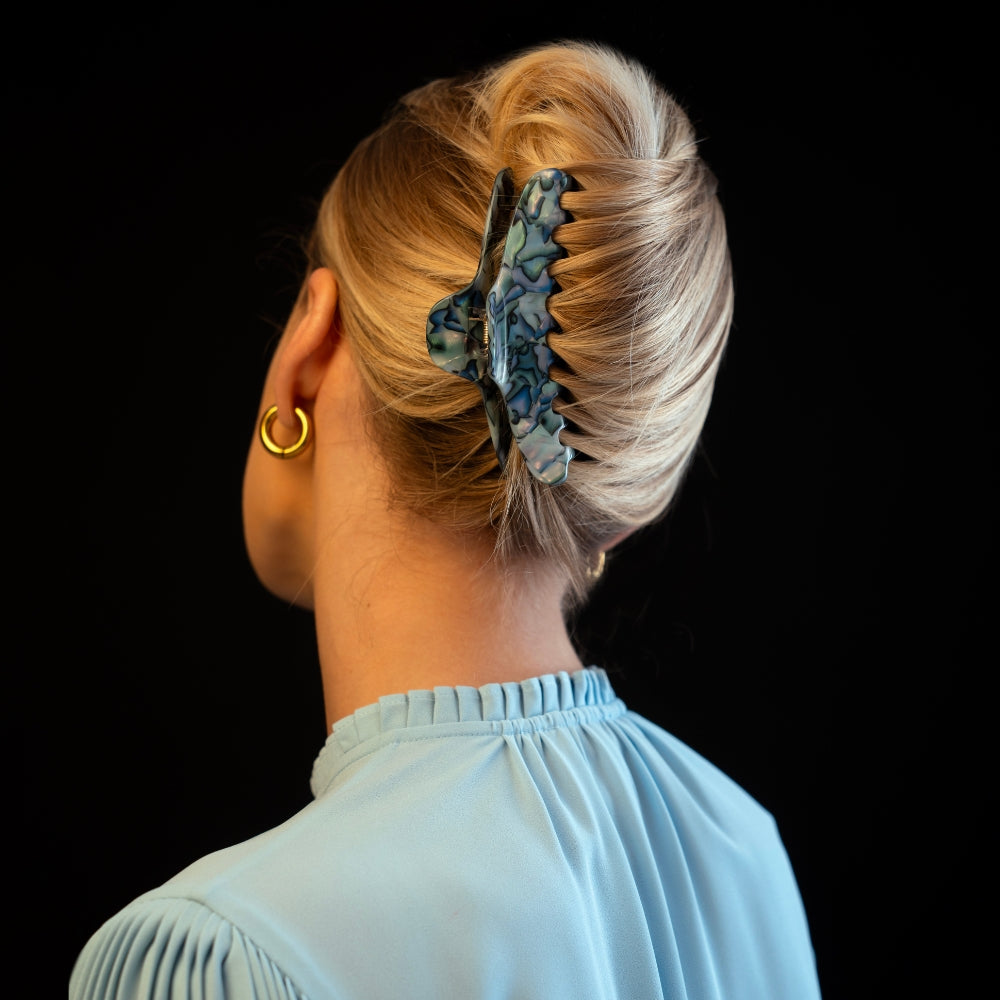
How it is made. A cheap claw is injection-moulded in seconds. Our Ooh La La! pieces are cut by hand from a patterned sheet and polished by hand over ten stages.
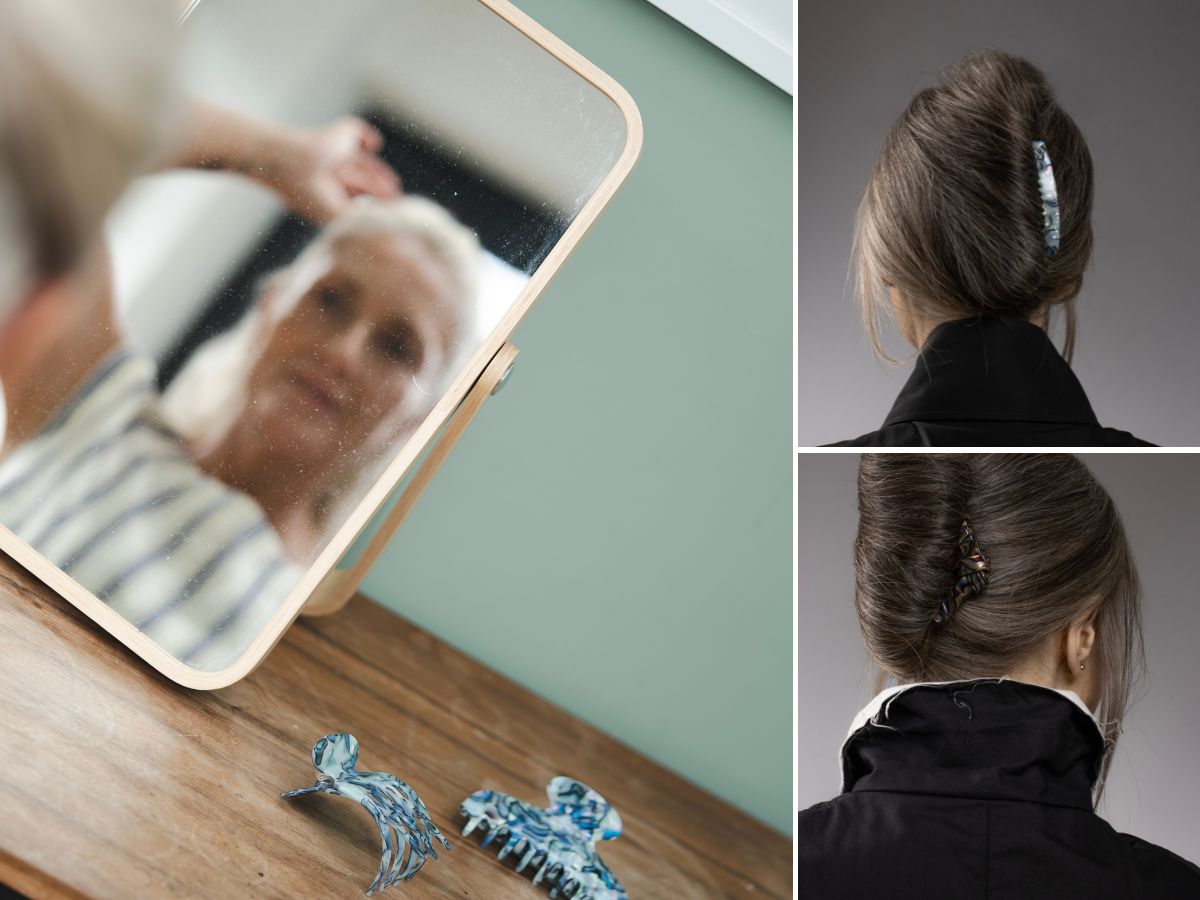
How it behaves. Acetate can be warmed and gently reshaped to fit your head. It holds colour with real depth. It does not go chalky and brittle after a year in a handbag.
How long it lasts. This is the one that matters most, and we come back to it below.
Is it biodegradable?
Here we want to be careful, because this is where a lot of brands are not.
Cellulose acetate does break down more readily than petroleum plastic, but how readily depends on the conditions and on how the material was made. It is not something you can put on a compost heap and expect to disappear. The research on it is genuinely mixed.
We used to describe our accessories as biodegradable and plastic-free. We have stopped. Not because anything about the material changed, but because we could not substantiate those words to the standard we would want if somebody asked us to prove it. We would rather lose the search term than tell you something we cannot stand behind.
So what is the honest environmental case for a TEGEN clip?
Three things, all of which we can prove.
The material is plant-based, not petroleum-based. Wood pulp and cotton rather than crude oil.
No offcut is wasted. When our handmade pieces are cut from a sheet, everything left over goes back into the same workshop and is moulded into our French Essentials and Hand Painted ranges. The same material gets used twice. More about how they are made.
They last. This is the big one. The greenest hair clip in the world is the one you do not have to replace. Ours are made from sheet acetate and fitted with steel clasps. Our French Handmade range carries a one-year guarantee, with six months on everything else, but customers tell us they get far longer than that.
"I have some barrettes and claw clips … that must be 10 years old and still going strong."
Sarah, November 2025
"I bought my first barette clip … in 2012 when I came across the shop in Brighton. I still have that clip and use it all the time and it is still perfect."
Catherine, September 2021
Is one good clip better than five cheap ones?
We would say so, and not only because we sell the good one.
Five cheap claws bought over five years is five broken springs, five sets of packaging and five deliveries, all from petroleum plastic. One clip that stays in your hair for years is one of each.
That is not a complicated environmental argument. It is just buying properly the first time.